Recovery Guide · Hanoi 2026
What to Eat After Dental Surgery in Hanoi: Soft Food Guide (2026)
One of the most common worries dental tourists have in Hanoi is what they'll eat during recovery. The good news: Vietnamese cuisine is basically designed for dental recovery. Silky noodle soups, velvety congee, fresh smoothies, steamed rolls that melt in your mouth — Hanoi's food culture is built around gentle, nourishing cooking that just happens to be perfect for healing mouths. This guide tells you exactly what to order, where to find it, and what to avoid.
General Rules After Dental Surgery
Before diving into the delicious specifics, here's the universal timeline that applies regardless of whether you've had implants, extractions, a root canal, or veneers placed:
First 24 Hours
Cold or lukewarm soft foods only. No hot foods, nothing hard or chewy, no straws (suction pressure can dislodge blood clots). Think chilled yogurt, room-temperature congee, soft tofu.
Days 2–3
Introduce warm (not hot) soft foods. Pho at a comfortable temperature is now your best friend. Still avoid spicy chilli, crunchy garnishes, and anything that requires significant biting force.
Days 4–7
Most soft foods are fair game. Introduce new dishes one at a time and chew on the opposite side from your treatment. Listen to your body — discomfort means dial it back.
Week 2+
Return to most normal foods, procedure-dependent. Your Hanoi dental clinic will give you specific post-op instructions — follow those above all else. Implant patients should be cautious for 3–6 months.
For a complete day-by-day breakdown of what to expect at each stage of healing, including pain levels, activity guidance, and when it’s safe to fly home, see our full recovery guide for dental surgery patients in Hanoi.
Universal Avoids (Regardless of Procedure)
- Alcohol — minimum 48–72 hours, longer for implants (interferes with healing and some antibiotics)
- Straws — suction pressure risks dry socket for extractions and implants
- Very hot foods and drinks — increase bleeding and swelling
- Hard, crunchy, or sticky foods — mechanical damage to wound sites
- Vigorous rinsing or spitting — disrupts clot formation
The Ultimate Hanoi Soft Food List
This is the centrepiece of your recovery. Hanoi's food scene is extraordinarily rich in soft, nourishing dishes that are ideal for healing — and genuinely delicious. Here's your full guide, organised by when you can safely eat each dish.
Always Safe — From Day 1
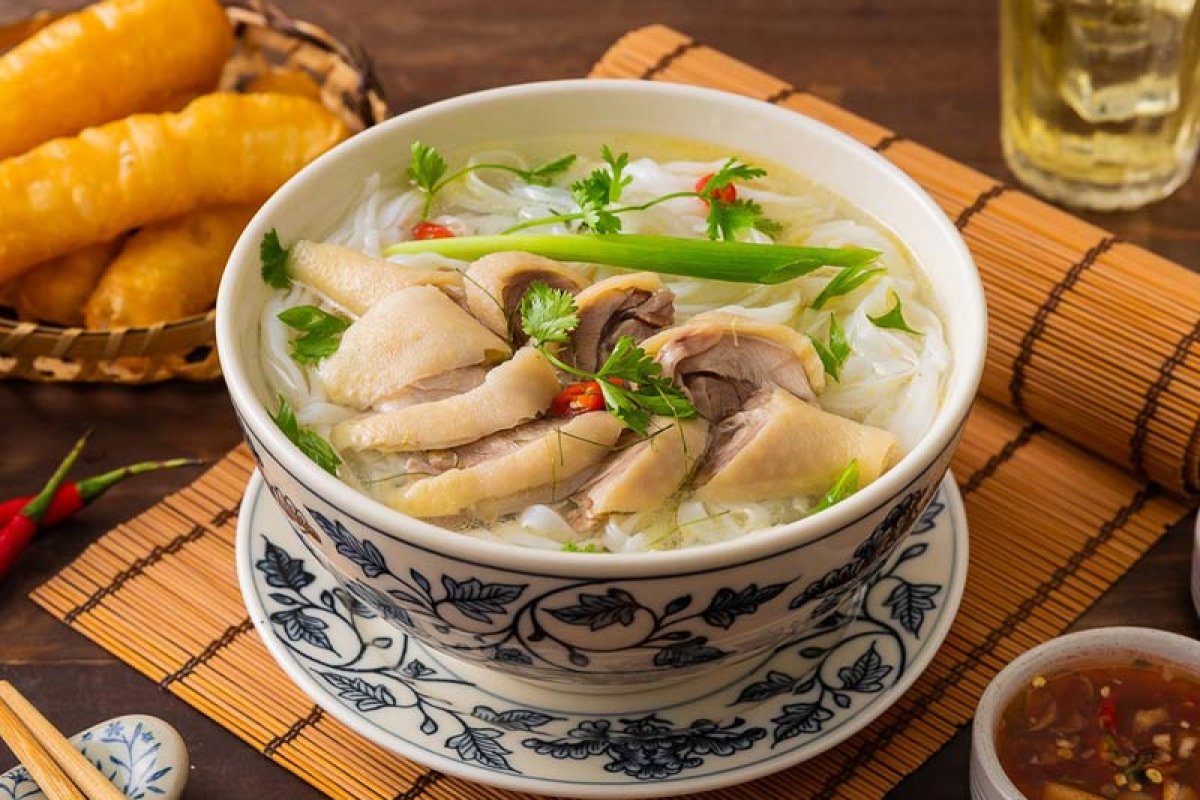
Pho (Beef or Chicken Noodle Soup)
The national dish is your recovery hero. Order with well-cooked soft noodles and sip the mineral-rich broth slowly. Ask for your bowl to be prepared lukewarm on Day 1. Protein from broth, carbohydrates from noodles — nutritionally excellent while you heal. Ask for pho chin (well-done) to ensure noodles and meat are fully soft.
Chao — Vietnamese Rice Congee
The undisputed number-one post-dental food in Vietnam. Locals eat chao when they're sick, recovering, or simply want comfort. It's rice slow-cooked until it dissolves into a thick, soothing porridge. Order chao ga (chicken) or chao ca (fish) — both are silky, nutritious, and require zero chewing. Your dental clinic nurse will probably suggest it.
Banh Cuon — Steamed Rice Rolls
Delicate sheets of rice batter steamed until gossamer-thin, then wrapped around minced pork and wood-ear mushroom. They are so soft they literally dissolve on contact. One of Hanoi's most beloved breakfast foods — and possibly the most dental-surgery-friendly dish in the country.
Sua Chua — Vietnamese Yogurt
Everywhere in Hanoi — corner stores, cafes, hotel buffets. Vietnamese yogurt is thicker and slightly sweeter than Western varieties. It's cold, soothing, and the probiotic cultures are especially valuable if you're on antibiotics. One of the first things your Hanoi dentist will likely recommend eating post-procedure.
Sinh To — Fresh Blended Smoothies
Vietnamese smoothies are thick meal-worthy blends — papaya, banana, avocado, dragon fruit — made with fresh fruit, condensed milk, and ice. Nutrient-dense and completely soft. Sip slowly with a spoon (no straws in the first 48 hours for implant and extraction patients). The avocado smoothie is particularly creamy and calorie-rich for when chewing is impossible.
Tofu Dishes — Silken Tofu
Silken tofu in broth or lightly steamed with ginger sauce is protein-rich and requires no chewing whatsoever. Hanoi has dedicated tofu restaurants, particularly around the Old Quarter. Order dau phu sot ca chua (tofu in tomato sauce) — the sauce softens everything further and adds lycopene, a wound-healing antioxidant.
Soft-Boiled Eggs
Available at virtually every hotel breakfast and most local restaurants. A soft-boiled egg with a runny yolk is one of the most easily consumed protein sources post-surgery. Complete amino acid profile supports tissue repair. Ask for trung luat (boiled egg) and specify you want it soft.
Ice Cream (After 48 Hours)
Cold and soothing — actually recommended by many dentists for extraction recovery. Kem trang (coconut ice cream) and kem bo (avocado ice cream) are Hanoi specialties. Avoid extreme cold on Day 1 if you have sensitivity; by Day 2, it's excellent for reducing localised inflammation. A genuine guilt-free treat.
Banh Flan — Vietnamese Creme Caramel
Vietnam's take on crème caramel — silky, eggy, lightly sweet, served cold or at room temperature. Found in every bakery, street stall, and convenience store in Hanoi. Requires no chewing, provides protein and energy, costs about 15,000 VND (~$0.60 USD). Consider it your official dental recovery dessert.
Safe from Day 2–3
Bun Bo Hue — Spicy Noodle Soup (No Chilli)
This rich, lemongrass-scented noodle soup is wonderful — but ask specifically for no chilli (khong cay). The broth and round rice noodles are soft and healing; it's the chilli paste that would irritate wound sites. Most Hanoi restaurants serving bun bo will happily make it mild.
Steamed Fish with Ginger Sauce
A classic Vietnamese preparation — fish steamed until it flakes at a touch, served with a light soy-ginger sauce. High-quality protein essential for tissue repair. Order ca hap gung at most sit-down restaurants. The fish should be genuinely flaky — if it feels firm, choose the broth and try again tomorrow.
Soft Steamed Rice
Plain steamed jasmine rice cooked a little longer than usual becomes naturally sticky and very gentle. Ask for it with broth poured over (com chan nuoc) to soften further. Pair with steamed fish or silken tofu for a complete, nourishing recovery meal.
Mashed Sweet Potato
Nutrient-dense, naturally soft when cooked, and widely available. Boil until very tender and mash with a little butter or condensed milk. Excellent source of vitamins A and C which actively support wound healing and immune function — particularly valuable during the post-operative period.
Sinh To Bo — Avocado Smoothie with Condensed Milk
One of Hanoi's most beloved drinks — ripe avocado blended with sweetened condensed milk and ice. Calorie-dense (great when eating is difficult), rich in healthy fats, vitamin E, and potassium. A single glass keeps you going for hours. Found at most smoothie bars and cafes around the Old Quarter and West Lake.
Hu Tieu — Clear Noodle Soup
A lighter, more delicate soup than pho, typically made with clear rice noodles in a clean pork or seafood broth. Gentle and easily digestible. Order without crunchy toppings and you have an ideal Day 2–3 meal that won't challenge healing tissue at all.
Banh Bao — Soft Steamed Dumplings
Vietnamese steamed buns — soft, fluffy wheat dough filled with pork, egg, and mushroom. The outer bun is pillowy and requires minimal effort. Available at street stalls and bakeries throughout Hanoi. A satisfying, filling option for when you want something more substantial than another bowl of soup.
Approach with Caution
- Banh mi — the crusty baguette is too hard. Ask for the filling only (pate, pork, cucumber, pickled daikon) served without the bread — most vendors will happily accommodate.
- Bun cha — the grilled pork patties can be quite chewy. Choose the softer meatball version, avoid charred edges. The noodles and dipping broth are completely fine.
- Spring rolls — fried versions (cha gio) are hard and sharp. Fresh spring rolls (goi cuon) wrapped in rice paper are completely soft and fine from Day 2.
- Egg coffee (ca phe trung) — delicious, and fine once it cools to warm-not-hot. Avoid the first 48 hours after whitening (the coffee will stain your newly brightened teeth).
- Pho garnishes — the soup itself is safe; skip fresh bean sprouts (slightly crunchy), and chilli slices (irritating). A light squeeze of lime is fine.
Avoid During Recovery
- Hard baguette / banh mi crust — can chip restorations and damage wound sites
- Tough stir-fried meat (bo luc lac, pork belly with crackling) — requires heavy chewing force
- Raw crunchy vegetables — carrot sticks, raw bean sprouts, fried shallots, crispy garnishes
- Very spicy dishes first 48 hours — capsaicin irritates wound sites and increases local inflammation
- Xoi (sticky rice) — inherently chewy and can pull at stitches or dislodge healing tissue
- Alcohol — minimum 48–72 hours for most procedures; 2+ weeks for implant surgery
- Straws — the suction creates negative pressure that disrupts clot formation (dry socket risk)
- Piping hot broths, teas, or coffee — increases vasodilation and bleeding risk in the first 24 hours
Planning Dental Treatment in Hanoi?
SmileJet connects you with Hanoi's top-rated international dental clinics — including Picasso Dental and Westcoast International. Free matching, no fees.
Explore Hanoi Dental OptionsBy Treatment: What to Eat & When
Different procedures have different timelines. Here's a quick reference by treatment type — bookmark this and check back each morning of your recovery.
| Treatment | Day 1 | Days 2–3 | Days 4–7 | Week 2+ |
|---|---|---|---|---|
| Whitening | Avoid staining foods: coffee, tea, red wine, soy sauce, dark broths, tomato-based dishes | Gradual return; test with light-coloured foods first | Normal diet | Normal; moderate staining foods in moderation |
| Veneers | Soft only (chao, yogurt, banh cuon, smoothies) | Soft warm (pho, steamed fish, tofu) | Most soft foods | Normal except very hard foods (ice, hard candy, baguette crust) |
| Crown | Soft (chao, yogurt, soft tofu, banh flan) | Soft-warm; introduce pho, soft rice | Soft-normal; avoid biting on crown side | Normal |
| Implant Surgery | Cold soft only, no straws (yogurt, cold chao, ice cream after 2hrs, smoothies by spoon) | Warm soft; pho (lukewarm), banh cuon, steamed fish | Soft and varied; avoid biting on implant site | Mostly normal; avoid direct biting on implant for 3–6 months until crown placed |
| Extraction | Cold soft, no straws (yogurt, ice cream, cold chao, banh flan) | Warm soft (pho, chao, steamed eggs) | Most soft foods | Gradual return to normal; avoid that extraction site |
| Root Canal | Soft (chao, yogurt, banh cuon) | Soft-warm (pho, steamed fish, soft rice) | Normal soft diet | Normal once permanent crown placed |
Planning ahead? Read our complete guide to dental implants in Hanoi and how many days to budget for your treatment.
Where to Find These Foods in Hanoi
Great soft food is never more than a 5-minute walk away in Hanoi. Here's a neighbourhood-by-neighbourhood breakdown.
Old Quarter (Hoan Kiem)
- Pho Gia Truyen, 46 Bat Dan St — legendary pho, open from 6am, arrive early to beat queues
- Banh Cuon Ba Hanh, Hang Ga St — steamed rice rolls made fresh in front of you
- Chao stalls open from dawn on Hang Bac and Hang Buom streets
- Banh flan vendors and yogurt shops throughout the market lanes
- Steps from Picasso Dental Old Quarter — perfect for post-appointment meals
West Lake Area (Tay Ho)
- Dozens of yogurt cafes along Quang An and Dang Thai Mai streets
- Fresh smoothie bars scattered throughout the Westlake neighbourhood
- Soft tofu restaurants (quan dau phu) on lake-facing lanes
- Walking distance from Picasso Dental Westlake and Westcoast International Dental
Your Hotel
- Most 3-star+ hotels include congee on the breakfast buffet
- Ask the kitchen for plain steamed rice, soft-boiled eggs, and plain soup — always accommodated
- Room service at mid-range hotels almost always includes omelette, porridge, and soup
Convenience Stores (Open Late)
- VinMart / WinMart — yogurt (multiple brands), pudding cups, instant porridge sachets, banana, avocado
- Circle K / GS25 / 7-Eleven — yogurt drinks, banh flan, soft snack bars, instant soup cups
- All open late and in every district — your 11pm snack emergency is fully covered
Hydration Tips
Staying hydrated is essential for healing, and Hanoi makes it remarkably easy:
- Coconut water (nuoc dua) — available at every corner store and street stall. Natural electrolytes — sodium, potassium, magnesium — make it superior to most sports drinks for recovery hydration. Drink at room temperature or slightly chilled.
- Herbal teas — Hanoi cafes often serve complimentary lotus or chrysanthemum tea. Drink lukewarm (not piping hot). Chamomile (available at Western supermarkets) has mild anti-inflammatory properties that complement your recovery.
- Plain bottled water — drink frequently throughout the day. Tap water is not suitable for drinking in Hanoi; bottled water (La Vie, Aquafina) is widely available and inexpensive. Aim for 8+ glasses daily post-surgery.
- Avoid very hot drinks for the first 24–48 hours. That includes Hanoi's famous egg coffee and strong green tea served scalding — wait until they cool to body temperature.
- Avoid extreme cold drinks in the first 24 hours if you have temperature sensitivity post-treatment. Slightly chilled is fine; icy cold can cause sharp sensitivity in freshly treated teeth.
Your Hotel Room Recovery Snack Kit
Before your procedure day, do a quick VinMart run and stock your room. You'll be very glad you did:
2–3 cups of yogurt (Vinamilk or TH True Milk) — Day 1 snacks and antibiotic gut support
Instant porridge sachets (chao an lien) — add hot water from room kettle, ready in 2 minutes
2–3 ripe bananas — soft, nutritious, zero preparation required
Banh flan cups — 2–3 servings, cold from the refrigerator shelf
Bottled water — two 1.5L bottles minimum; stay well-hydrated
Coconut water cartons — 2–3 for natural electrolyte replenishment
Paracetamol (500mg) — available without prescription at any nha thuoc (pharmacy)
Ibuprofen — anti-inflammatory, over the counter (follow your dentist's advice)
Ultra-soft toothbrush — pharmacies sell post-surgical ultra-soft brushes inexpensively
Small bag of ice (hotel ice machine) — for 20-minute swelling reduction sessions in the first 4 hours
Total cost for this kit: approximately 200,000–350,000 VND (~$8–14 USD). One of the best small investments you'll make for your recovery comfort.
Quick Vietnamese Phrases for Ordering Soft Food
Most restaurant staff in tourist areas speak some English, but a few Vietnamese phrases will take you far — and will genuinely delight any local vendor:
| English | Vietnamese | Pronunciation Tip |
|---|---|---|
| No chilli please | Khong cay a | kong KAY ah |
| Very soft please | Nau mem hon a | now mem hon ah |
| Not too hot please | Khong qua nong a | kong kwah nung ah |
| I had dental surgery | Toi vua phau thuat rang | toy vwa fow twat zang |
| One bowl of congee please | Cho toi mot bat chao a | cho toy mot bat chow ah |
| No garnishes / raw toppings | Khong can rau song a | kong can row shong ah |
| Thank you very much | Cam on rat nhieu | gam un zat nyew |
Frequently Asked Questions
Can I eat pho after dental implant surgery in Hanoi?
Yes — pho is one of the best foods after implant surgery. Order it lukewarm (not piping hot), ask for well-cooked soft noodles, and sip the broth with a spoon rather than a straw. Avoid adding fresh chilli or crunchy garnishes for the first 48 hours. Pho Gia Truyen at 46 Bat Dan in the Old Quarter is a favourite among dental tourists who've had treatment at nearby Picasso Dental Old Quarter. For more on what to expect from implant treatment, read our complete dental implants guide for Hanoi.
Is Vietnamese food generally spicy? Will it irritate my wound site?
Northern Vietnamese food (Hanoi cuisine) is significantly milder than southern or central cuisine. Most Hanoi dishes are not inherently spicy — chilli is always added at the table, so you simply skip it. Classic dishes like pho, chao, banh cuon, and tofu soups are naturally gentle on wound sites. Just tell your server "khong cay" (no spice) and you'll have no issues at all. For a full overview of navigating Hanoi as a dental tourist, see our step-by-step Hanoi dental trip planning guide.
Where can I find Western-style soft foods in Hanoi?
Circle K and VinMart convenience stores stock yogurt, pudding cups, instant porridge, and soft snack bars. Most mid-range hotels serve scrambled eggs, mashed potato, and soup on request. Areas around West Lake — near major dental clinics like Westcoast International and Picasso Dental Westlake — have plenty of Western cafes with smoothie bowls, yogurt parfaits, and soft food options.
Can I drink coffee after dental surgery in Hanoi?
Avoid very hot coffee for the first 48 hours — heat increases blood flow and can disrupt healing. Hanoi's famous egg coffee (ca phe trung) is fine if served warm rather than scalding. Iced coffee (ca phe da) is suitable from Day 2, though avoid using a straw if you've had an extraction or implant. Skip dark coffee entirely for 48 hours after whitening treatment as it will stain your newly brightened enamel.
Is street food safe during dental recovery in Hanoi?
Yes, with a few sensible precautions. Choose freshly cooked hot dishes like pho and chao from reputable stalls with high turnover — the cooking heat kills bacteria. Avoid raw garnishes (fresh herbs, raw bean sprouts) for the first 48 hours as they can carry surface bacteria. Well-cooked soups from established street vendors are generally safe and are exactly what locals eat during their own post-dental recovery. Read our guide on combining a Hanoi holiday with dental treatment for more on experiencing the city while healing.
Continue Planning Your Hanoi Dental Trip
Dental Implants in Hanoi: Complete Guide 2026
Costs, clinics, brands, timeline — everything you need to know about implants in Hanoi.
Best Dental Clinics in Hanoi for International Patients 2026
Top-rated clinics with English-speaking staff and international standards.
Combining a Hanoi Holiday with Dental Treatment
Sample itineraries for seeing the city while fitting your treatment schedule.
Ready to Save on Dental Treatment?
Explore Hanoi's Top Dental Clinics
SmileJet makes it easy to compare Hanoi's best international dental clinics, get free quotes, and plan your entire trip — including post-surgery recovery support and food guidance.
Medical Disclaimer: This guide is for general informational purposes only and does not constitute medical advice. Dietary recommendations after dental surgery vary depending on your specific procedure, individual health, and your dentist's post-operative instructions. Always follow the specific guidance provided by your treating dental clinic in Hanoi. If you experience unusual pain, excessive bleeding, fever, or signs of infection, contact your clinic or seek medical attention immediately. SmileJet is a dental tourism information platform, not a medical provider.