
Viet Kieu Guide: Returning to Vietnam for Retirement
You left decades ago. Vietnam has changed. But it is still home -- and now your foreign pension, savings, and dual identity give you advantages that other retirees do not have.
1. Why Viet Kieu Are Coming Home
There are more than 5.4 million overseas Vietnamese (Viet Kieu) living in over 130 countries, with the largest communities in the United States (~2.3 million), Australia (~350,000), Canada (~290,000), France (~300,000), and South Korea. Many left Vietnam in the 1970s-1990s and built lives abroad. Now, as retirement approaches, growing numbers are looking back.
The reasons are both practical and emotional. Practically, a Western pension goes 2.5 to 3 times further in Vietnam. A retiree who struggles to afford rent and healthcare in Sydney, Los Angeles, or Toronto can live comfortably in Da Nang or Ho Chi Minh City on the same income. Emotionally, Vietnam is home. The food, the language, the family connections, and the familiar rhythms of daily life create a quality of retirement that no other country can replicate for someone who grew up Vietnamese.
Vietnam itself has changed enormously. The country that many Viet Kieu left decades ago is now a dynamic, modern economy with world-class infrastructure in major cities, excellent healthcare, safe communities, and a government that actively welcomes overseas Vietnamese through favourable visa and property policies.
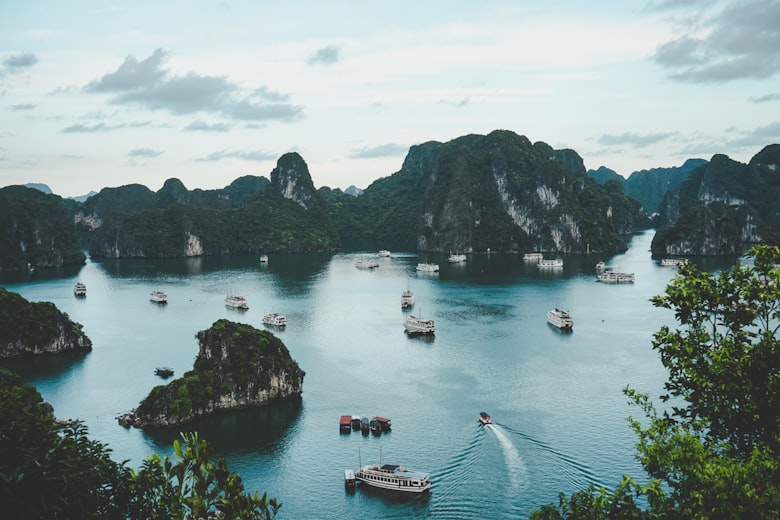
Vietnam has changed enormously since many Viet Kieu left. Modern infrastructure, world-class healthcare, and an economy growing at 6-7% annually await returning retirees.
2. The Viet Kieu Advantage
Returning Viet Kieu have significant advantages over other foreign retirees in Vietnam. These are not minor -- they fundamentally change the retirement experience.
| Advantage | Viet Kieu | Other Foreign Retirees |
|---|---|---|
| Language | Native or heritage Vietnamese (even partial fluency helps enormously) | Rely on English; communication barriers in daily life and healthcare |
| Visa | 5-year visa exemption certificate (180 days per entry, unlimited entries) | 45-day visa-free or 90-day e-visa; cycling required |
| Property | Clear ownership rights for residential property; family can hold land | Can own apartments in approved projects; land ownership restricted |
| Cultural fluency | Understand customs, food, family dynamics, social norms | Learning curve; cultural misunderstandings common |
| Family network | Relatives who can assist with bureaucracy, property, social integration | No local family support; reliance on expat community |
| Healthcare communication | Can communicate directly with doctors and staff in Vietnamese | Need English-speaking hospitals; nuance lost in translation |
| Food & lifestyle | Already know the cuisine, markets, daily rhythms | Adjustment period; dietary and cultural adaptation |
3. The 5-Year Visa Exemption
The single most important administrative advantage for Viet Kieu is the 5-year visa exemption certificate (Giay mien thi thuc). This document allows overseas Vietnamese who hold foreign citizenship to enter Vietnam unlimited times for stays of up to 180 days per entry without a visa.
| Feature | 5-Year Visa Exemption (Viet Kieu) | Standard Options (Other Foreigners) |
|---|---|---|
| Duration | 5 years, renewable | 45 days visa-free or 90 days e-visa |
| Stay per entry | Up to 180 days | 45 or 90 days |
| Entries | Unlimited | Single entry (e-visa) or limited |
| Cost | Varies ($0-$50 depending on embassy) | $25 per e-visa |
| Renewal | Renewable indefinitely | Must re-apply each time |
How to Apply
Apply at the Vietnamese embassy or consulate in your country of residence before departure, or at the Immigration Department in Vietnam. You will need proof of Vietnamese origin: a Vietnamese birth certificate, old Vietnamese passport, family registry (ho khau), or a letter from a Vietnamese relative confirming your origin. Processing typically takes 5-10 business days at an embassy.
4. Property Ownership
Under Vietnam's 2014 Housing Law, overseas Vietnamese with valid entry documents can own residential property in Vietnam. This is a significant change from earlier regulations that restricted Viet Kieu property ownership.
What you can own: apartments in approved housing projects, houses in residential areas. There is no cap on the number of properties. You can buy, sell, lease, inherit, and mortgage property.
What is more complex: land use rights (as distinct from the building on the land) have additional restrictions. In practice, many Viet Kieu purchase apartments or have a Vietnamese family member hold land-use rights for houses. Seek legal advice from a Vietnamese real estate lawyer before purchasing.
5. Pension Portability by Country
| Country | Pension | Payable in Vietnam? | Amount Change? | Key Note |
|---|---|---|---|---|
| Australia | Age Pension | Yes | Converts to outside AU rate after 26 weeks (~AUD $28,839/yr single) | No AU-VN social security agreement. Full guide. |
| United States | Social Security | Yes (restricted country workaround) | No reduction -- same amount worldwide | Use US bank + Wise. Full guide. |
| Canada | CPP + OAS | Yes | OAS may be reduced (clawback for high income); CPP unchanged | 20+ years of Canadian residence required for full OAS overseas |
| UK | State Pension | Yes | Frozen -- no annual increases because VN has no reciprocal agreement with UK | Pension locked at rate when you leave UK. Consider this carefully. |
| New Zealand | NZ Super | Yes | General rate applies; may be lower than domestic rate | No NZ-VN social security agreement. Full guide. |
| France | Retraite | Yes | No reduction for overseas residence | France-VN DTA applies. Social security agreement exists. |
6. Tax Considerations
Tax obligations depend entirely on your country of citizenship.
| If You Are... | Home Country Tax? | Vietnamese Tax? | DTA Available? |
|---|---|---|---|
| Vietnamese-Australian | Only on AU-sourced income if non-resident | Yes, worldwide income if VN tax resident (183+ days) | Yes (AU-VN DTA 1992) |
| Vietnamese-American | Yes -- worldwide income for life (US citizen obligation) | Yes, worldwide income if VN tax resident | No (signed 2015, not ratified by US) |
| Vietnamese-Canadian | Only on CA-sourced income if non-resident | Yes, worldwide income if VN tax resident | Yes (CA-VN DTA) |
| Vietnamese-British | Only on UK-sourced income if non-resident | Yes, worldwide income if VN tax resident | Yes (UK-VN DTA) |
| Vietnamese-French | Only on FR-sourced income if non-resident | Yes, worldwide income if VN tax resident | Yes (FR-VN DTA) |
The key insight: US citizens are the only group that cannot escape home-country worldwide taxation by moving to Vietnam. All other nationalities can cease home-country tax residency by establishing residence in Vietnam, though the specific rules vary. For US citizens, the Foreign Tax Credit (FTC) prevents most double taxation. For detailed guidance by country, see our Australian tax guide or US tax guide.
7. Healthcare & Insurance
Your language ability is a healthcare superpower. While other expats are limited to the handful of international hospitals with English-speaking staff, Viet Kieu can access the full range of Vietnamese healthcare -- including excellent local hospitals and specialists who may not speak English but are highly skilled.
International health insurance ($80-$250/month) is still recommended for catastrophic coverage. But for routine care, your ability to communicate directly with Vietnamese doctors means better diagnoses, more nuanced discussions, and lower costs (local hospitals charge significantly less than international hospitals).
Foreign government healthcare (Medicare, NHS, etc.) does not cover you in Vietnam regardless of your citizenship. You need private international insurance or pay out of pocket. Even without insurance, Vietnamese healthcare costs 60-80% less than Western countries.
8. Dental Care: Your Language Advantage
Dental treatment is one of the largest out-of-pocket healthcare costs for retirees in Western countries. In Vietnam, the same procedures cost 70-80% less, using the same globally certified materials.

Vietnamese dental clinics use the same globally certified implant brands (Straumann, Nobel Biocare, Osstem) at 70-80% less than Western prices.
As a Vietnamese speaker, you have a direct advantage in dental care. You can communicate symptoms, preferences, and concerns directly with the dentist -- no translator, no misunderstanding. You can read Vietnamese patient reviews, navigate local clinic websites, and understand post-treatment care instructions precisely.
| Procedure | Australia (AUD) | USA (USD) | Vietnam (USD) | Saving |
|---|---|---|---|---|
| Dental Implant (Korean) | $4,110-$6,005 | $3,000-$4,500 | $700-$950 | ~78% |
| All-on-4 (per arch, zirconia) | $22,000-$35,000 | $18,000-$28,000 | $7,000-$9,000 | ~65% |
| Zirconia Crown | $2,210-$3,950 | $1,200-$2,200 | $200-$400 | ~85% |
| Porcelain Veneer | $1,900-$3,160 | $1,000-$2,500 | $250-$450 | ~80% |
| Root Canal (molar) | $1,900-$3,475 | $1,000-$2,000 | $150-$300 | ~85% |
9. Reconnecting with Family
For many Viet Kieu, returning to Vietnam is about more than money. It is about being close to ageing parents, siblings, nieces, and nephews. It is about grandchildren growing up knowing their grandparents. It is about the daily rituals -- morning pho with a sibling, weekend family gatherings, Tet reunions that do not require a 20-hour flight.
Family connections also provide practical advantages. A Vietnamese relative can help with property purchases, navigate local bureaucracy (opening bank accounts, registering with police, signing leases), introduce you to trustworthy service providers, and provide a social network from day one. This is something no amount of money can replicate for a non-Vietnamese retiree.
10. Cultural Reintegration
Vietnam has changed dramatically since most Viet Kieu left. The country you remember may not exist in the same way. Cities are modernised, young people are globally connected, and daily life is shaped by smartphone apps, ride-hailing, and digital payment. This is generally a pleasant surprise -- the Vietnam of 2026 is more convenient and comfortable than many expect.
At the same time, some things are familiar: the importance of family, the rhythm of market mornings, the culture of tea and conversation, the festivals, and of course the food. The emotional experience of returning is often described as bittersweet -- joy at being home, mixed with the recognition that decades have passed and everyone has changed.
Give yourself time. Many Viet Kieu find that the first 3-6 months involve a re-adjustment period as they navigate a country that is both familiar and new. Joining Viet Kieu community groups (online and in-person) connects you with others who understand this unique experience. For where to base yourself, see our best places to retire guide.
11. Frequently Asked Questions
Can Viet Kieu get a long-term visa?
Yes. The 5-year visa exemption certificate allows unlimited entries, 180 days per visit. Apply at a Vietnamese embassy with proof of Vietnamese origin (birth certificate, old passport, family registry). Renewable indefinitely. Far superior to standard 45-day visa-free or 90-day e-visa. Visa guide.
Can Viet Kieu own property?
Yes. Under the 2014 Housing Law, overseas Vietnamese with valid entry documents can own residential property -- apartments and houses, no cap on numbers. Land use rights have additional restrictions. Family members can hold land. Seek Vietnamese real estate legal advice before purchasing.
Can I receive my foreign pension?
Yes. AU Age Pension: payable overseas (reduced rate after 26 weeks). US Social Security: payable worldwide (restricted country, use US bank). UK State Pension: payable but frozen (no increases). NZ Super: payable under general rate. CA CPP/OAS: payable. Keep foreign bank account + Wise for transfers.
Do I pay tax in Vietnam?
If VN tax resident (183+ days), yes -- worldwide income at 5-35%. Tax obligations in your country of citizenship also apply: US citizens file for life; AU/NZ/UK/CA citizens can cease home-country tax residency. DTAs available for AU, UK, CA, FR -- not for US. Seek cross-border tax advice.
How much can I save on dental?
70-80% vs Western prices. Implant: $700-$1,500 vs $3,000-$7,000 abroad. All-on-4: $5,500-$9,000 vs $18,000-$35,000. Your Vietnamese language ability gives you direct communication with dentists -- no translator needed. SmileJet lists 2,000+ listed clinics. Cost guide.
What advantages do Viet Kieu have?
Language (direct healthcare communication), 5-year visa exemption, clearer property rights, cultural fluency, family support network, and the emotional comfort of coming home. These fundamentally change the retirement experience compared to non-Vietnamese retirees.
Prices are indicative; only a clinic's written quote applies to you. See how we source prices. SmileJet is an information service, not a healthcare provider, and nothing here is medical advice.
What treatment costs there
Published clinic fees, not estimates. Indicative until a clinic puts a quote in writing.