How Phu Quoc's 30-Day Visa Exemption Works for Dental Tourists (2026)
The visa rules every international dental patient needs before flying to Phu Quoc: who qualifies, how the 30-day exemption works on arrival, airline check-in quirks, and what to do if you want to visit mainland Vietnam.
How Phu Quoc's 30-Day Visa Exemption Works for Dental Tourists (2026)
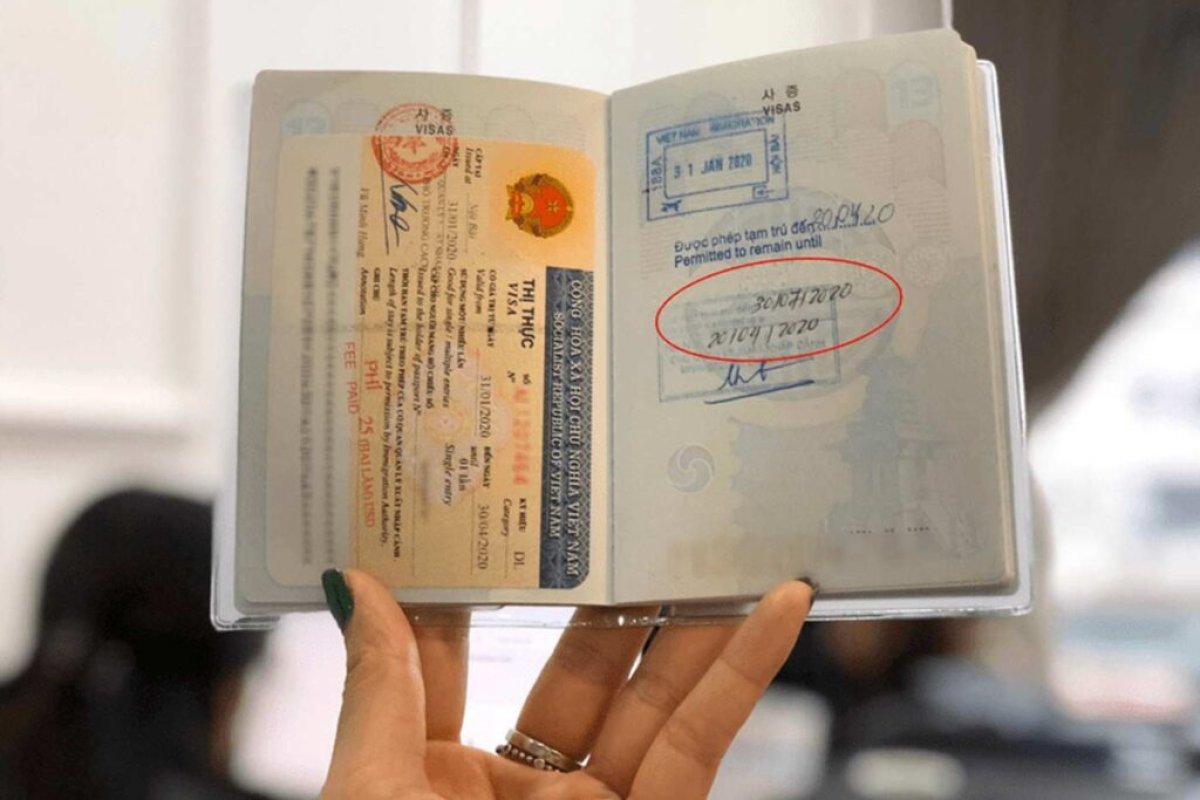
All nationalities receive a 30-day visa-free stamp on arrival when flying directly into Phu Quoc International Airport (PQC). No fee, no application, no advance paperwork. The officer at immigration stamps your passport in 5 to 15 minutes and your dental trip starts the moment you clear arrivals.
This guide explains exactly who qualifies, how the exemption is applied at the airport, the direct-flight rule that trips up some travellers, airline check-in quirks, and why you cannot use the exemption to visit HCMC or Hanoi on the same trip.
Explore Phu Quoc Dental Destination →The short answer
- Who: All nationalities, no exclusions.
- Length of stay: 30 days, stamped on arrival.
- Route: Direct international flight into Phu Quoc International Airport (PQC).
- Cost: Zero. No fee, no application, no approval letter.
- Restriction: Exemption is valid for Phu Quoc Island only. Mainland Vietnam requires a separate e-visa.
- Passport: Must be valid for at least 6 months from date of entry.
Who qualifies for the Phu Quoc visa exemption?
Every nationality qualifies. The Phu Quoc 30-day visa exemption is one of the few visa-free policies in the world with no nationality-based restrictions. Whether you hold a passport from the United States, United Kingdom, Australia, Canada, Germany, France, Hong Kong, Singapore, India, Nigeria, Brazil, or any other country, the rule is identical: fly directly into PQC and you get 30 days stamped free on arrival.
This is different from Vietnam's mainland policy, which offers visa waivers to roughly 25 countries (ASEAN nations, South Korea, Japan, most of Western Europe, the UK, Russia, and Belarus) but requires everyone else to apply for an e-visa. For Phu Quoc Island specifically, there is no nationality filter.
How it works at the airport
The exemption is applied at three touchpoints: check-in at your home airport, in-flight paperwork, and immigration on arrival. Here is exactly what happens.
1. Home airport (at check-in)
The airline agent checks two things: your passport validity (must have at least 6 months remaining beyond your travel date) and your final destination coded as PQC. If your booking shows PQC as the arrival airport, the agent tags your bags straight through and issues the boarding pass. No visa stamp, no paperwork, no extra questions in most cases. Some carriers will also request proof of onward travel at this stage (see airline rules below).
2. In-flight (on the aircraft)
Cabin crew distribute Vietnam arrival cards on flights landing at PQC. Fill it out with your passport details, flight number, accommodation address in Phu Quoc (the hotel name is enough), and intended length of stay. Keep this card with your passport.
3. PQC immigration (on arrival)
After disembarking, walk to the immigration counter and present three items: your passport, your completed arrival card, and your return flight confirmation if asked. The officer reviews the documents, takes a fingerprint or photo, and stamps a 30-day visa-free entry into your passport. Typical processing time is 5 to 15 minutes depending on how many flights arrive simultaneously. There is no fee and no secondary counter to visit.
The direct flight requirement (the rule most people misunderstand)
The single most important rule: your final leg into Vietnam must be a direct international flight that lands at PQC. If you fly into Ho Chi Minh City (SGN) or Hanoi (HAN) and then take a domestic Vietnamese flight to Phu Quoc, you have technically entered mainland Vietnam. Immigration at SGN or HAN will deny you entry without a valid visa because the exemption does not apply there.
The grey area: if the entire journey is booked as a single international itinerary with one airline or codeshare partner (for example Vietnam Airlines HKG-SGN-PQC on one ticket, with PQC as the coded final destination), many airlines and immigration officers treat this as international transit and apply the exemption at PQC. However, policies vary between carriers and individual officers. Where possible, book a direct flight that lands at PQC as your first Vietnamese airport. If direct flights are unavailable, get the mainland e-visa to remove any ambiguity.
Direct international flights into PQC (2026)
Phu Quoc International Airport is served by direct flights from eight major Asian hubs and seasonal charters from Australia. The table below lists current routes, carriers, frequency, and approximate return fares.
| Origin | Airlines | Frequency | Return Fare (from) |
|---|---|---|---|
| Hong Kong (HKG) | Vietnam Airlines, Cathay Pacific | Daily | USD 260 |
| Seoul Incheon (ICN) | Vietjet, Korean Air | Daily | USD 320 |
| Taipei (TPE) | Vietjet, China Airlines | Daily | USD 290 |
| Bangkok (BKK) | AirAsia, Vietjet | Daily | USD 180 |
| Singapore (SIN) | Scoot, Vietjet | Daily | USD 220 |
| Kuala Lumpur (KUL) | AirAsia | 3x weekly | USD 240 |
| Melbourne / Sydney | Seasonal Nov-Apr charters | 2-3x weekly | AUD 800 |
Fares move with season. Book 6 to 10 weeks ahead for the best combination of fare and clinic availability. Detailed planning is covered in our Phu Quoc dental trip planning guide.
Airline check-in rules: the onward travel trap
Several carriers require proof of onward travel even for visa-exempt passengers. This is the airline's own policy, not a Vietnamese immigration requirement. Airlines impose it because if they fly a passenger who is later refused entry, they are responsible for the return flight and may be fined by Vietnamese authorities.
AirAsia, Scoot, and Vietjet have all been documented refusing boarding to passengers without a printed or emailed return ticket. Vietnam Airlines, Cathay Pacific, and Korean Air are generally less strict but have discretion. The safest move: bring a screenshot or printout of your return flight confirmation and have it ready at check-in. Screenshots on a phone are usually accepted.
If you booked a one-way ticket and plan to buy your return once you arrive, expect problems. Book the return leg before leaving home even if your dental treatment schedule might shift; changes are cheaper than a refused boarding.
The mainland Vietnam restriction (critical for dental tourists)
The 30-day exemption is geographically restricted to Phu Quoc Island only. This matters for dental tourists more than for beach holidayers because many patients consider combining their treatment with a side trip to HCMC, Hanoi, or Da Nang.
- Phu Quoc only: No Vietnam visa required. Fly in, get stamped, stay up to 30 days, fly out directly from PQC.
- Mainland visit planned (HCMC, Hanoi, Da Nang, anywhere else): You need a standard Vietnam e-visa. It costs USD 25, you apply at evisa.gov.vn, and it is usually approved within 3 to 5 working days.
- Layover warning: Even a short layover in HCMC on the way home may count as "entering mainland" depending on how your ticket is structured and whether you clear immigration. Confirm the routing with your airline before booking.
- Safest path: book PQC as both your arrival and departure airport. This eliminates every edge case.
Practical scenarios (real dental tourist routings)
Scenario 1 — Australian patient, full-arch implants
Sydney to Phu Quoc via HCMC on Vietnam Airlines, single ticket with PQC as the coded final destination. Returns the same way. The airline treats it as an international itinerary and issues boarding through to PQC. On arrival at HCMC the passenger stays airside in the international transit area, re-boards the domestic-equipment leg to PQC, and is stamped 30 days visa-free at Phu Quoc immigration. Result: visa-free, provided the single-ticket structure holds.
Scenario 2 — Hong Kong patient, weekend dental trip
HKG-PQC direct on Cathay Pacific, 2 hours 40 minutes, returns the same way. No mainland touchpoint at all. Result: simplest possible case. Visa-free 30-day stamp on arrival. Perfect for Hong Kong dental tourists.
Scenario 3 — US patient via Korean Air
LAX-ICN-PQC on Korean Air, single ticket, international transit through Seoul Incheon. The first Vietnamese airport of arrival is PQC. Result: visa-free on arrival at Phu Quoc.
Scenario 4 — UK patient via Qatar Airways (the ambiguous case)
London to Phu Quoc via Doha and Ho Chi Minh City: LHR-DOH on Qatar Airways, then DOH-SGN on Qatar, then SGN-PQC on a Vietnam Airlines domestic codeshare. Some airlines issue this as a single international ticket and the exemption applies; others treat the SGN-PQC leg as a true domestic segment and require a full Vietnam e-visa. Recommendation: buy the USD 25 e-visa before travel. It removes the ambiguity and costs less than one night in most Phu Quoc hotels.
Scenario 5 — Dental treatment plus HCMC weekend
Patient wants 10 days of implant work in Phu Quoc plus a 3-day food tour in Ho Chi Minh City afterwards. The Phu Quoc exemption does not cover the mainland portion. Result: apply for the standard Vietnam e-visa (USD 25) before departure. The e-visa covers both Phu Quoc and mainland entry on the same document.
What dental tourists need to do before flying
- Passport validity: Confirm at least 6 months remaining beyond your planned departure date. Renew now if you are anywhere close.
- Flight booking: Book PQC as both arrival and departure airport. Avoid mainland layovers.
- Return flight proof: Print or screenshot your return itinerary for airline check-in staff.
- No visa paperwork: No application, no fee, no approval letter, no photos required.
- Travel insurance: Not a visa requirement but always sensible for a surgical dental trip. Check that your policy covers Vietnam and does not exclude planned dental procedures.
- Clinic confirmation: Have your clinic's name and address written down — immigration occasionally asks for accommodation details, and listing your hotel is simpler.
Once your visa situation is sorted, the next step is packing smart. See our complete Phu Quoc dental tourism packing list 2026 for a clinic-ready checklist covering medications, documents, comfort items, and what to leave at home.
Phu Quoc exemption vs mainland Vietnam visas
| Option | Cost | Apply when | Validity | Where valid |
|---|---|---|---|---|
| Phu Quoc 30-day exemption | Free | No application; on arrival | 30 days | Phu Quoc only |
| Vietnam e-visa | USD 25 | 3 to 5 days before travel at evisa.gov.vn | 30 or 90 days | All of Vietnam |
| Visa on arrival | USD 25 + service fee | Requires pre-arranged approval letter | Up to 90 days | Mostly land borders |
Two Phu Quoc clinics experienced with international patients
Planning a dental trip to Phu Quoc?
Compare listed clinics, flight routes, and treatment timelines on one page. Every clinic on SmileJet is vetted, reviewed, and English-speaking.
Browse Phu Quoc Clinics →Frequently asked questions
Do I need a visa to visit Phu Quoc in 2026?
No. All nationalities receive a 30-day visa-free stamp on arrival at Phu Quoc International Airport when flying directly. There is no application, no fee, and no advance paperwork. Your passport must have at least 6 months validity beyond your arrival date.
How long can I stay in Phu Quoc on the visa exemption?
Up to 30 days per visit, stamped on arrival. If you need longer, you must either exit Vietnam and re-enter (restarting the 30-day clock) or apply for a standard Vietnam visa that covers longer stays.
Can I visit mainland Vietnam on the Phu Quoc exemption?
No. The exemption is restricted to Phu Quoc Island only. For mainland Vietnam you need a separate e-visa, which costs USD 25 and is issued online at evisa.gov.vn after a 3 to 5 working day processing window. The mainland e-visa also covers Phu Quoc, so if you want both, just apply for the e-visa.
Does the Phu Quoc visa exemption cost anything?
No fee, no application, no paperwork. The 30-day entry is stamped free on arrival at PQC airport. The only cost associated with the trip is the passport you already own and the flight into Phu Quoc.
What happens if my flight connects through HCMC to Phu Quoc?
If your tickets are a single international itinerary with PQC as the coded final destination, the exemption typically applies and you are stamped at Phu Quoc immigration. If HCMC is a separate domestic connection on a different ticket, you need a Vietnam e-visa because immigration will treat you as entering mainland Vietnam. When in doubt, confirm the routing with your airline before booking or buy the USD 25 e-visa to remove the ambiguity.
Related reading for Phu Quoc dental tourists
- Phu Quoc dental tourism 2026: the complete guide
- Dental implants in Phu Quoc: costs, brands, and timelines
- How to plan a Phu Quoc dental trip end-to-end
- Phu Quoc dental tourism for Australian patients
- Phu Quoc dental tourism for Hong Kong patients
- Phu Quoc dental tourism: 40 questions answered
- Phu Quoc dental tourism packing list 2026
Ready to plan your Phu Quoc dental trip?
Browse listed clinics, request a quote, and fly in visa-free.
Explore Phu Quoc on SmileJet →Sources & Last Updated: Last verified April 2026. Vietnamese visa rules can change. Confirm with your airline and the Vietnamese embassy or consulate in your country before travel. Primary reference: evisa.gov.vn (official Vietnamese immigration portal).
Medical & travel disclaimer: This article is informational, not legal or medical advice. Dental treatment decisions should be made in consultation with a licensed dentist after an individual clinical assessment. Travel and visa policies are set by the Government of Vietnam and may change without notice.
Prices are indicative; only a clinic's written quote applies to you. See how we source prices. SmileJet is an information service, not a healthcare provider, and nothing here is medical advice.
Want this priced for your own mouth? Send a photo and we will come back with written quotes from clinics that fit.
Get my quoteIf you are also looking at treatment
What it costs, and who does it.
Published clinic fees, not estimates. Indicative until a clinic puts a quote in writing.
Dental care in Phu Quoc
Prices, clinics and how a treatment trip there actually works.
Dental implants in Phu Quoc
What a single implant costs there, and which systems the clinics use.
Veneers in Phu Quoc
Composite, E.max and zirconia, with the price each clinic publishes.
All-on-4 in Phu Quoc
Full-arch pricing, how many trips it takes, and who handles the complex cases.
Keep reading
Related guides.
Questions to ask a Cuenca dentist before you book
Twelve questions that separate a quote you can rely on from one you cannot. Ask them before you book flights.
How long to stay in Cuenca for dental implants
The honest answer is two trips, months apart. Here is what each one involves and why it cannot be compressed.
Getting to Cuenca for dental work
Cuenca has its own airport but few international patients land there directly. How the routes actually work.
Send a photo. Get three quotes.
It costs nothing and it does not commit you to anything. Most people hear back the same day.